
Click Smart – Stay Cyber Safe
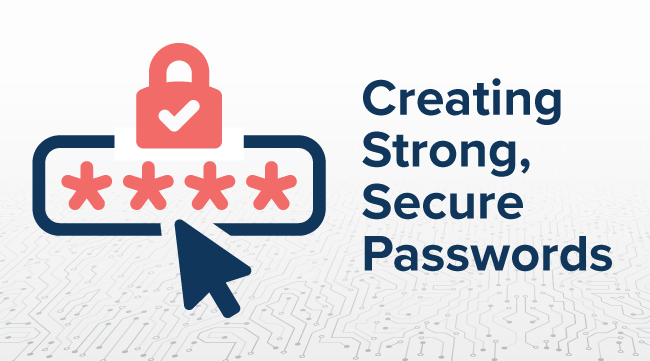
Tip: Secure Passwords
September 2026
Nearly everything today, like banking, email, healthcare records, even your smart thermostat, lives behind a login screen. Your password is often the only thing standing between your personal information and someone who wants to misuse it. A weak or reused password can be cracked in seconds by the automated tools hackers use today. The good news is that building strong password habits doesn’t take much time, and it makes a real difference.
Here are five ways to keep your accounts locked down tight:
Make It Long
Length matters more than almost anything else when it comes to password strength. A short password, even one packed with unusual characters often can be cracked faster than a long one made of ordinary words. Aim for at least 12 to 16 characters. One easy way to get there without racking your brain is to string together a short, memorable phrase. A passphrase – like CoffeeMorningsAreTheBest or PrairieWindBlowsHard92 — is often easier to remember than a jumble of random letters.
Mix It Up With Symbols
Adding a mix of uppercase and lowercase letters, numbers, and symbols makes a password exponentially harder to guess or crack, since it forces an attacker to consider many more possible combinations. A password like Tractor2024! is far tougher to break than tractor2024. Small changes like these go a long way.
Avoid Personal Info
It’s tempting to use something easy to remember, like a birthday, a pet’s name, a street address, or your favorite sports team, but this is exactly the kind of information hackers look for first. Much of it is available on social media or public records, and it’s often the first thing attackers try. Keep personal details out of your passwords entirely, and steer clear of common words or predictable patterns like password123.
Use Unique Passwords for Every Account
Reusing the same password across multiple sites is one of the riskiest habits online. If just one of those sites is ever breached, hackers will try that same password on your email, banking, and other accounts, a technique known as “credential stuffing.” Giving every account its own unique password means a breach in one place doesn’t put everything else you have at risk.
Use a Password Manager
Remembering dozens of long, unique passwords isn’t realistic for most people, and that’s exactly what a password manager is built to solve. These tools securely store and even generate strong, unique passwords for every account you have, so you only need to remember one master password. Many web browsers and phones now include built-in password managers, and there are also standalone options available, many of them free for basic use.
None of these tips require special technical skill, just a little intention. Taking a few minutes to strengthen your passwords today is one of the simplest and most effective ways to protect your identity, your finances, and your peace of mind online.
More stories in this Issue

101 Years of Kraut and Community
September 2026

Message from the CEO
September 2026

Behind the Board
September 2026

From Steele, ND to the White House
September 2026

Two Grants, One Deadline
September 2026

Friday Nights & Fall Spikes
September 2026

Oh My Gourd!
September 2026

Heading Out of Town?
September 2026
Click Smart – Stay Cyber Safe
September 2026
